What to do after you receive your home in Spain
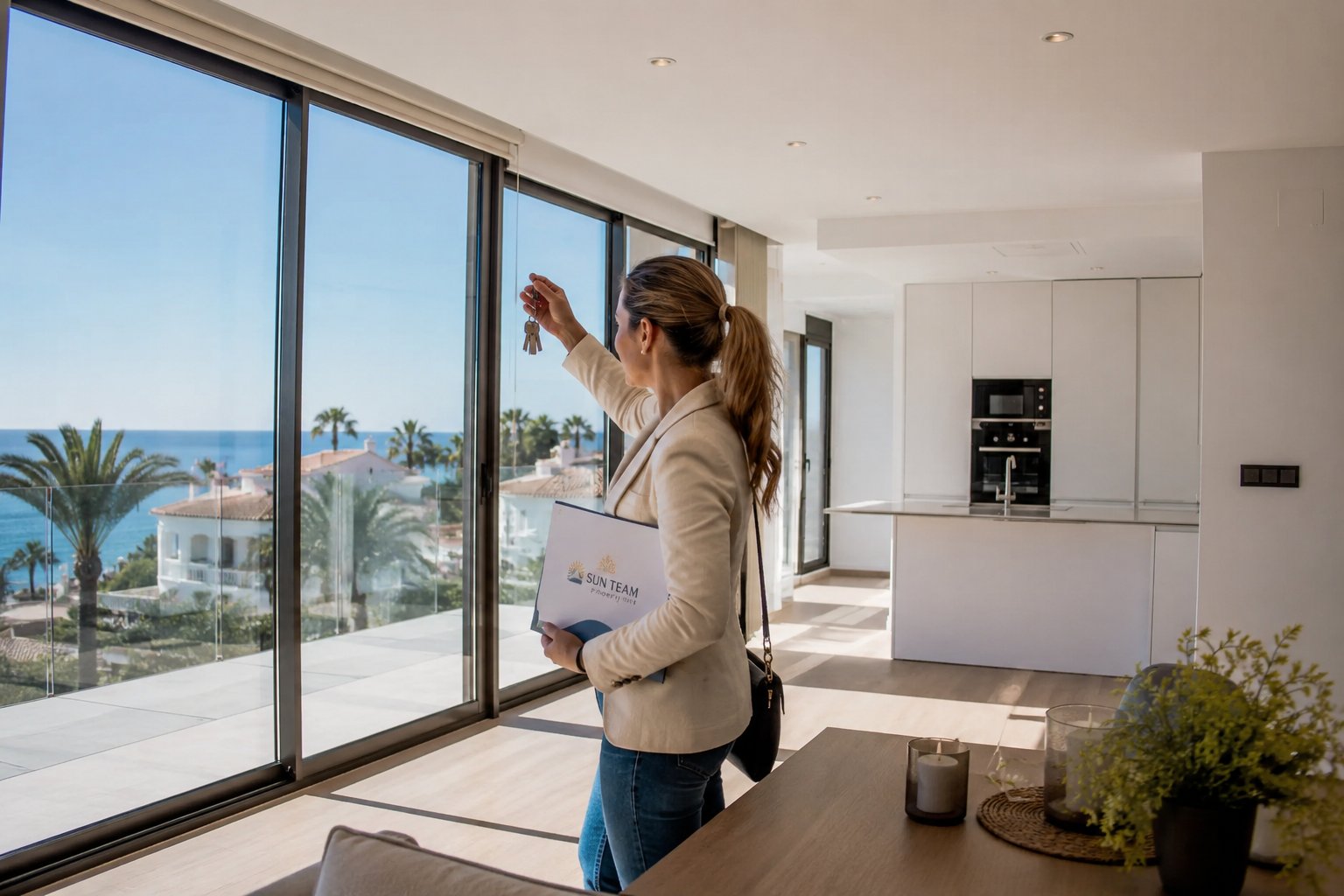
For many people, buying property in Spain is a dream come true: living in the sun, investing by the sea or having a holiday home. More and more clients are choosing an apartment on the Costa Blanca, in Valencia, in Alicante or on the Costa Cálida.
But once the deed has been signed, a very important question arises: what now?
Many new owners do not know:
- how to transfer the utilities into their name,
- where to go to register with the administration,
- how a homeowners' association works in Spain,
- whether the locks need to be changed,
- how to protect the property,
- which charges they will have to pay,
- and what to do to avoid problems after the purchase.
That is why we have prepared a step-by-step guide to help you get calmly through the formalities that follow buying a property in Spain.
First steps after buying a property in Spain
Once you sign the title deed (Escritura Pública) before the notary, you are officially the owner. From that moment the obligations of maintaining the flat, apartment or house begin.
After the purchase you will usually receive:
- a copy of the notarial deed,
- the keys to the property,
- details of the previous utility contracts,
- information about the homeowners' association,
- the documents relating to the property.
On the very first day it is worth:
- photographing the meters,
- checking the condition of the home,
- scanning the documents,
- keeping the keys and remote controls safe,
- checking that the appliances work.
This is especially important with resale properties.
Changing the locks
This is one of the most important steps after buying. With a second-hand home you never know:
- who held the keys before,
- whether tenants had keys,
- whether renovation crews had access,
- how many owners used the property previously.
We therefore recommend:
- replacing the lock cylinders,
- fitting a new lock,
- or installing a smart access system.
Increasingly popular options are:
- smart locks,
- keypad entry,
- remote access systems,
- holiday-rental apps.
This is particularly useful for investors who buy apartments to rent out on the Costa Blanca.
Checking the technical condition of the property
Even if the home looks perfect, it is worth checking its technical condition carefully. It is best to inspect:
- the electrical installation,
- the air conditioning,
- the water heater,
- the tightness of the windows,
- the shutters,
- the drains,
- the water pressure,
- the household appliances.
In many holiday properties, common problems are:
- damp,
- lack of ventilation,
- leaks after the winter,
- air-conditioning problems after a long period of disuse.
It is also worth taking a set of photographs of the home straight after you receive it.
How to transfer the utilities after buying in Spain
This is one of the topics new owners in Spain search for most often. After the purchase you need to transfer into your name:
- electricity,
- water,
- gas,
- internet.
Electricity
The best-known energy suppliers include:
- Iberdrola,
- Endesa,
- Naturgy.
To transfer the contract you usually need:
- a passport or NIE,
- the purchase deed,
- a bank account number,
- the CUPS number.
It is also very important to check:
- the tariff,
- the contracted power,
- any outstanding debts.
In Spain many homes have more contracted power than they need, which raises the bills.
Water, internet and gas
Internet is most often installed by:
- Movistar,
- Orange,
- Vodafone.
It is worth checking straight away:
- fibre coverage,
- internet speed,
- contract length,
- early-termination penalties.
For holiday rentals, fast internet is very important today.
Need help transferring utilities in Spain? Get in touch with us.
The community of owners in Spain: how it works
If you buy an apartment in a block or an urbanisation, you automatically become part of the homeowners' association (Comunidad de Propietarios). It is the equivalent of a residents' association or housing cooperative.
The administration is responsible for:
- cleaning,
- swimming pools,
- lifts,
- gardens,
- security,
- common areas,
- garages,
- CCTV.
Who to contact after the purchase
After buying, contact the building administrator (Administrador de Fincas) or the president of the community (Presidente de la Comunidad).
The administration's details are usually found:
- at the entrance to the building,
- on the notice board,
- from the seller,
- from the estate agent.
The administration will most often ask for:
- a copy of the purchase deed,
- your NIE document,
- contact details,
- a bank account number.
Community fees in Spain
Community costs depend on:
- location,
- the standard of the development,
- the number of facilities,
- the size of the property.
Average fees are:
- €40–80 a month in simple buildings,
- €100–250 in urbanisations with a pool,
- considerably more in luxury premium complexes.
The fees may include:
- cleaning,
- security,
- lift maintenance,
- garden upkeep,
- a reserve fund,
- CCTV.
Can the community ban holiday rentals?
Yes, and it is a very important issue for investors. Some homeowners' associations in Spain introduce restrictions on:
- short-term rentals,
- Airbnb,
- noise,
- the number of guests,
- rules for using the pool.
That is why, before buying, it is worth:
- checking the community's rules,
- asking for the latest minutes of meetings,
- verifying the local regulations.
In the Valencian Community the rules on holiday rentals change regularly.
Home insurance in Spain
Many owners forget it, yet insurance is very important. A good policy should cover:
- water damage,
- fire,
- burglary,
- damage to neighbours,
- owner's liability,
- assistance,
- damage arising from holiday rental.
If you buy an apartment as an investment, it is worth telling the insurer that the property will be let.
Alarm and securing the property
In Spain many properties stand empty for part of the year, so securing the home is important. The most popular solutions:
- alarm,
- CCTV,
- smart cameras,
- motion sensors,
- smart access-control systems.
Well-known companies: Securitas Direct and Prosegur.
This matters especially for:
- houses,
- holiday apartments,
- investment properties.
IBI and the refuse charge in Spain
After buying you must also remember the IBI property tax and the refuse charge (Basura). IBI is the equivalent of a property tax. Its amount depends on:
- location,
- floor area,
- cadastral value.
Make sure that:
- the owner's details have been updated,
- payments are collected from the right account,
- the property has no outstanding debts.
You will find more about taxes in Taxes in Spain.
The most common mistakes after buying in Spain
- Not changing the locks: a basic security mistake.
- Not transferring the utilities: can lead to payment problems and disconnection.
- Not contacting the administration: causes confusion over community fees.
- No insurance: a financial risk.
- Not knowing the community rules: can lead to conflicts or fines.
- No alarm: especially unwise for empty properties.
Is it worth using an agency after the purchase?
For many clients it is a great convenience, especially if they do not live in Spain permanently. After-sales support can help to:
- transfer the utilities,
- deal with the administration,
- arrange an alarm,
- find insurance,
- prepare the property for rental,
- avoid formal errors.
FAQ
How much is the community fee in Spain?
Most often between €40 and €250 a month, depending on the standard of the building and its facilities.
Do you need to change the locks after buying a home?
We recommend it, especially for resale properties.
How do you transfer the electricity in Spain?
You need to contact the energy supplier and present the proof of ownership and a bank account number.
Can the community ban Airbnb?
Yes, some communities introduce restrictions on holiday rentals.
Is it worth installing an alarm?
It is worth considering, especially if the property stands empty for part of the year.
Summary
Buying property in Spain is only the beginning of a new stage. Good preparation after the purchase helps you to:
- avoid problems,
- protect the property,
- keep costs under control,
- enjoy your apartment or house in peace.
If you plan to buy on the Costa Blanca, in Valencia, in Alicante or on the Costa Cálida, it is worth working with an experienced team that will help you not only with the purchase but also after the transaction is completed.
Need help after your purchase? Joanna Sikorska, phone and WhatsApp: +34 636 16 49 16, or use the contact form.