Heating in Spain: Common Systems in Homes
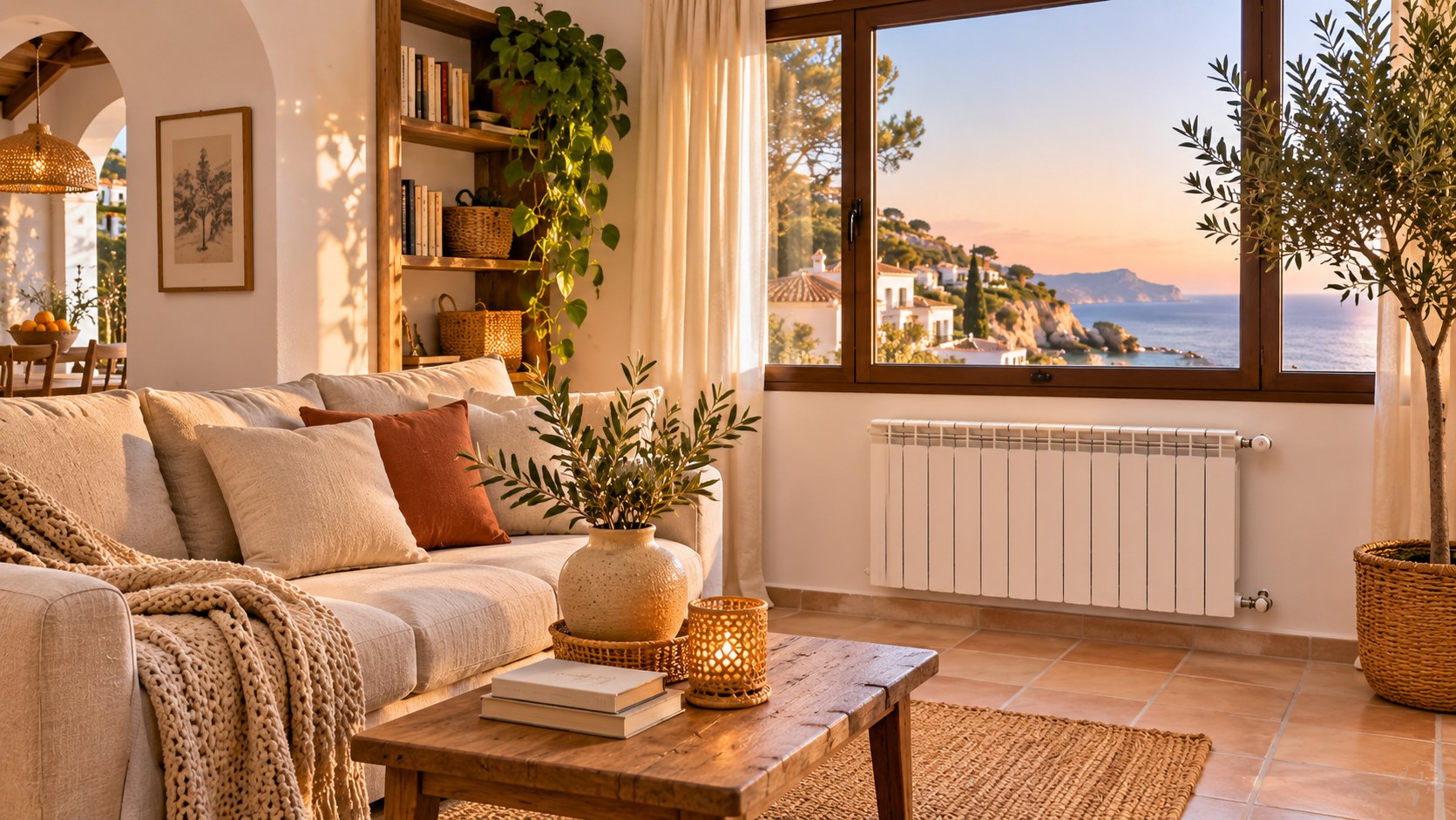
Homes in Spain are heated in a variety of ways. One of the most widespread is central heating, which can run on gas, heating oil or electricity. In coastal areas heat pumps are also very popular, drawing on energy from the surrounding air to heat the home. Many houses also have a fireplace or wood-burning stove, often as a supplementary source of warmth.
Common heating systems
The choice depends on location, climate, residents' preferences and the energy sources available. These are the main ones.
Central heating
Heat is produced in one place and carried by pipes and radiators to the different rooms. It can run on gas, heating oil or electricity, and spreads warmth evenly through the whole house.
Underfloor heating
Heat is produced in the floor and rises gradually, warming the room evenly. It can be powered by gas, electricity or solar energy. It is a very efficient solution that provides comfort and helps save energy.
Fireplaces and stoves
Some homes have traditional fireplaces or stoves, often used as a decorative feature. They can burn wood, coal or gas, and heat by radiation. They create a cosy atmosphere and give interiors character.
Air conditioning
This is a common feature of Spanish homes. Although its main purpose is cooling on hot days, many modern units also have a heating function, so residents can enjoy a comfortable temperature all year round.
In summary
Heating systems in Spanish homes are very varied and suited to local conditions. Each has its pros and cons, so it is worth thinking carefully about which suits your home and way of life. Whichever you choose, what matters is thermal comfort and care for the environment.
If you are house-hunting and want to know what heating a particular property has, ask us.